I often get asked how people can enter digital PR as a career. As of yet, there is no digital PR degree you can obtain. Most decent senior digital PR practitioners, like SEO professionals, are self-taught. The role itself is a hybrid – part PR, part SEO, part content marketer, part journalist. If you have a background in one of these area, you will likely have at least some of the knowledge to make a good digital PR.
However, plenty of digital PRs I’ve worked with or trained myself have no formal training or experience in any of the above roles. However, all of the successful ones were able to quickly learn all of the five attributes listed below.
1. Resilience
One of the hard truths about digital PR is that at some point, you are going to work really, really hard on a campaign, and it’s going to flop. You will send it out widely and wait for the links to roll in but get nothing in return, except maybe the odd unsubscribe request. Worse, sometimes you will get a reply, but that reply will tell you in no uncertain terms what you can do with your press release.
Some days, it can be more demoralizing than others, especially amid a link drought. You’ll see your peers sharing their success on social media. Comparison is the thief of joy, and never is that more true than as a digital PR. Without resilience, you could easily find yourself falling victim to imposter syndrome or start to think you’re not cut out for the job.
To thrive in a digital PR role, you must learn to take rejection, especially when you see the first sign that a campaign isn’t working. Rather than taking it personally, you need to have the hard conversations and make the right decision to pivot or move on to the next. Both can be bruising to the ego when you work hard.
But, remember, it’s not personal. It could be the news cycle. It could be that someone else got the idea first. It could just be bad luck.
Remember when COVID-19 hit, or Queen Elizabeth II died? Imagine how many PR campaigns had to be shelved.
Learning to separate yourself and your abilities from your campaigns will be crucial to building up the resilience you need to get back up after you’re knocked down. It will help you start working on the next campaign.
The media cycle is fickle. There will be losses, but there will also be wins. This is why when I’ve been in charge of teams, I’ve focused on celebrating the little wins because they maintain morale.
A journalist emails you back? Crack out the champagne emoji on Slack. Did you get some coverage? Send that little fireworks GIF.
Earned a client a link? Break out the party hats and doughnuts. Did you land a follow link in a dream top publication? Take the rest of the afternoon off. You’ve earned it.
Dig deeper: How SEO and digital PR can drive maximum brand visibility
2. Drive
If you can handle all of the above with resilience, then the next skill you need is drive. This is the key attribute I look for when hiring for junior digital PR roles.
You can teach someone the difference between a follow link and a no follow link, but it’s very hard to teach someone drive.
If you’re worried you don’t have experience in a digital PR role, that’s OK. The nuts and bolts of how to do digital PR can be taught, but you’ll need to be able to cultivate and demonstrate drive.
If you don’t have KPIs, set some for yourself. Have a personal hit list of dream sites you want to land a link on and a short list of dream clients you’d love to work with.
There is a reason this role suits the driven and those who find the thrill of the chase fulfilling. The best in the business will always be chasing the next bit of coverage, that next dream link.
I’ve been doing this job for years, and there is still no feeling quite like landing a great link for a client after weeks of trying.
3. Curiosity
When I asked my fellow digital PRs what skills made them good at their jobs, the first thing a bunch of the very best ones I know all said was curiosity.
And it’s spot on. If you’re not curious, then this isn’t the career for you.
If, like me, you come from a journalism background, you’re probably professionally nosey anyway. The same is usually true of those from an SEO background, who are often natural problem solvers.
One of the hardest parts of digital PR is ideation. Ideation is the creation of ideas for campaigns, whether they be reactive ones based on trending topics or pop culture moments or proactive ones based on a client’s niche.
Coming up with ideas in an empty room can be a real challenge. If you’re not spending your time falling down rabbit holes of information, it’s going to be very difficult to keep bringing fresh ideas to the table.
I always know I am risking burnout and need a holiday if I start to lose interest in everything and the tap of ideas starts running dry.
You will need to find a way to stay interested in the world around you and to feed yourself with the things that spark ideas. This will look different for everyone.
As digital PRs, our curiosity is often one of our most important skills. It’s worth nurturing, and for me, that means giving myself plenty of time and space to indulge in my curiosity.
Sometimes that looks like scrolling TikTok. Other times, it might look like taking a walk in the middle of the day to get outside and let things percolate in your head.
I also stay in touch with what my peers are doing in the industry via newsletters such as The Grapevine or checking out what other creatives are up on Famous Campaigns.
Dig deeper: Are we becoming less curious about SEO?
4. News sense
News sense is difficult to explain. Some think it is an instinct you either have or don’t. I think of it as a muscle you can train over time.
To break or make the news as a journalist or PR, you have to first become an avid consumer of the news. You must immerse yourself in the media landscape where you’re trying to place your clients. It doesn’t matter whether it’s hard news or lifestyle and entertainment news.
Often, this means thinking about the type of content your client’s customers are interested in. After all, a link is all the more valuable if it actually drives some traffic.
So how do you do this?
Sign up for the newsletters. Follow news organizations and magazines on X or TikTok. Each day, start by reading the morning’s headlines and watch the news with your dinner at night.
If you work with lifestyle clients (fashion, beauty, interior etc.), apply the same level of content consumption to the lifestyle press and current lifestyle and celebrity trends. Make sure you’re on top of the next big Netflix show. Generally, just keep your finger on the pulse of culture.
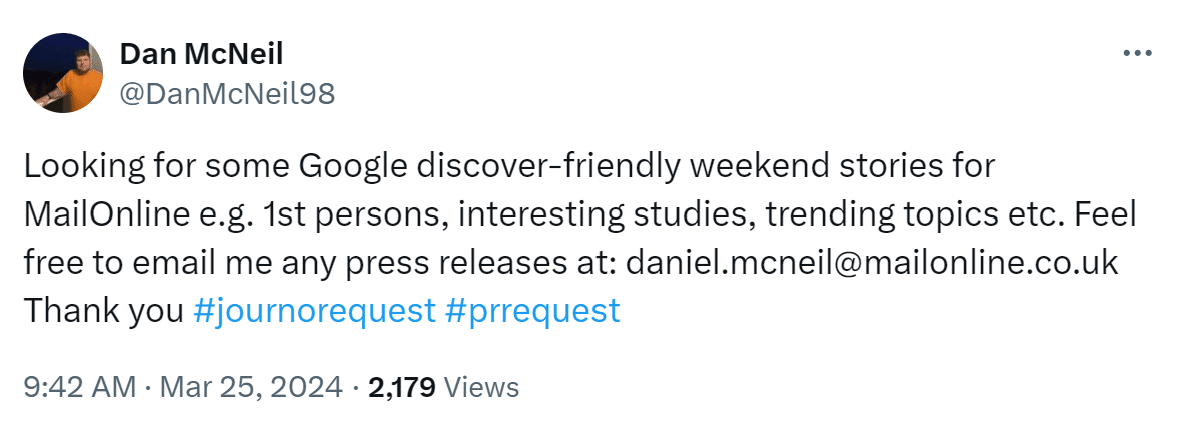
This is the easiest way to understand what is and isn’t news in your niche. These days, SEO often informs the news. There are now reporters whose job title is SEO reporter, providing articles based on what consumers are searching for.
I will now caveat everything I have just said by saying it is OK to take a break from this.
The news these days is a relentless, 24-hour ticker tape of information and (sometimes upsetting) content. Remember to protect your mental health and take frequent breaks and digital detoxes.
When you’re on annual leave, it’s OK to delete your apps and news alerts and give yourself some genuine respite, even if you’re a freelancer.
Dig deeper: How to avoid search marketing burnout
5. Grasp of media law and ethics
Media law will differ based on where you are located, but I am writing this from the UK and we have one of the most stringent libel laws in the world.
When we train as journalists here, media law makes up a crucial part of it, and if you don’t pass that exam, you don’t get accredited. And rightly so.
I am not saying that digital PRs need to be accredited the same way journalists are. However, in a world where we’re increasingly sending content to journalists on behalf of clients — and that content is often copied and pasted onto a publisher’s site linking back to our client’s site — it’s probably not a bad idea to have a grasp of the law.
Aside from understanding the legal ramifications of our work, it’s also important to have a strong sense of media ethics.
With the rise of what has been termed “black hat digital PR,” the ethical considerations of digital PR have become a hot topic over the last year or so. (This is something I’ve written about before.)
If you come from a background where you didn’t study PR or media, this might not be something that was instilled in you. You might believe it’s not very important and that your approach should be links at all costs.
However, if you want to succeed in digital PR and be proud of your work, it is essential to understand the importance of ethical conduct in digital PR.
This is key to building trust, which is a large part of your job — trust with clients, wider marketing stakeholders and trust with journalists. Thanks partly to AI (and the rise of black hat digital PR), trust is harder to earn than ever and journalists are inundated with AI sources.
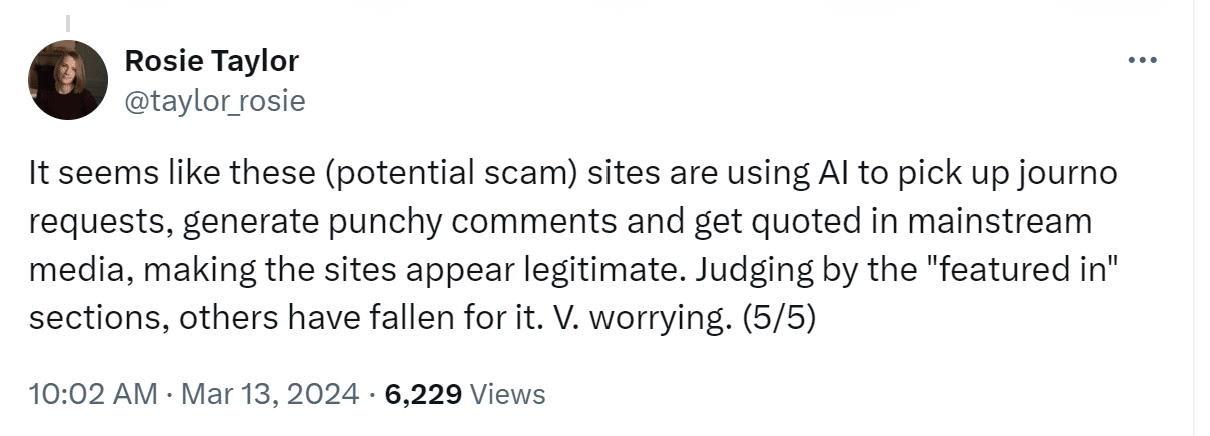
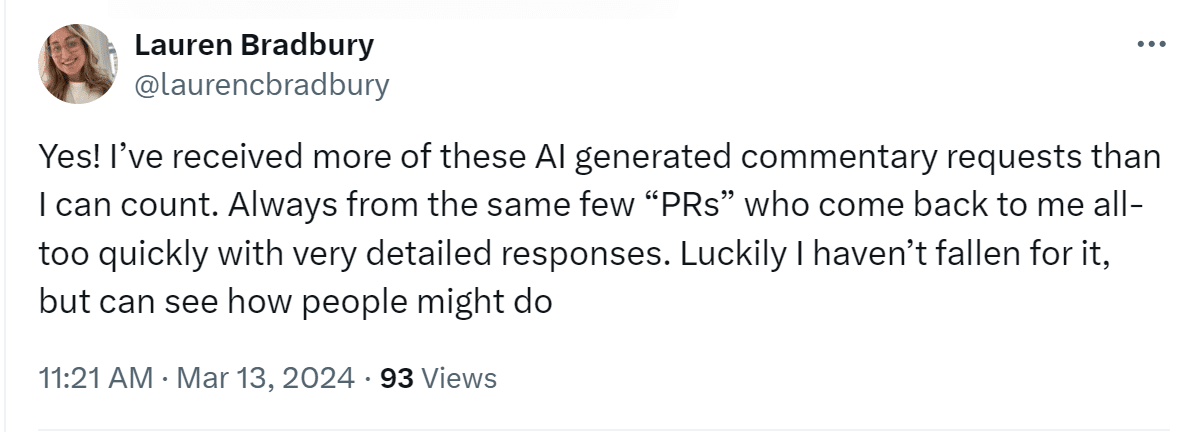
Journalists are quickly becoming wary of these AI sources and fake experts who make up black hat digital PR. We already know that Google takes the fight against disinformation seriously, especially with YMYL (Your Money or Your Life) topics.
We know that clients care about their brands and websites and don’t want to be either penalized by Google or blacklisted by the media. It’s pretty easy to see that this behavior is not a long-term strategy for success in digital PR.
While ethics are fairly simple, media law can be tricky. Wherever you are based, you will find great resources online to equip you with the basics. In the U.S., a great resource is the First Amendment Handbook.
Mastering the foundations for building a digital PR career
Digital PR is a great career choice for entry-level digital marketers looking for specialization. A lot of the role can be self-taught or learned on the job.
To excel in this role, you will need to be resilient, driven and curious. It will also help you build that news sense muscle and develop a basic understanding of media law and digital PR ethics and what not to do.
If you can nail these five things, then the links are yours for the taking.
from Search Engine Land https://ift.tt/fMWuxLO
via https://ift.tt/jlH2Rme https://ift.tt/fMWuxLO